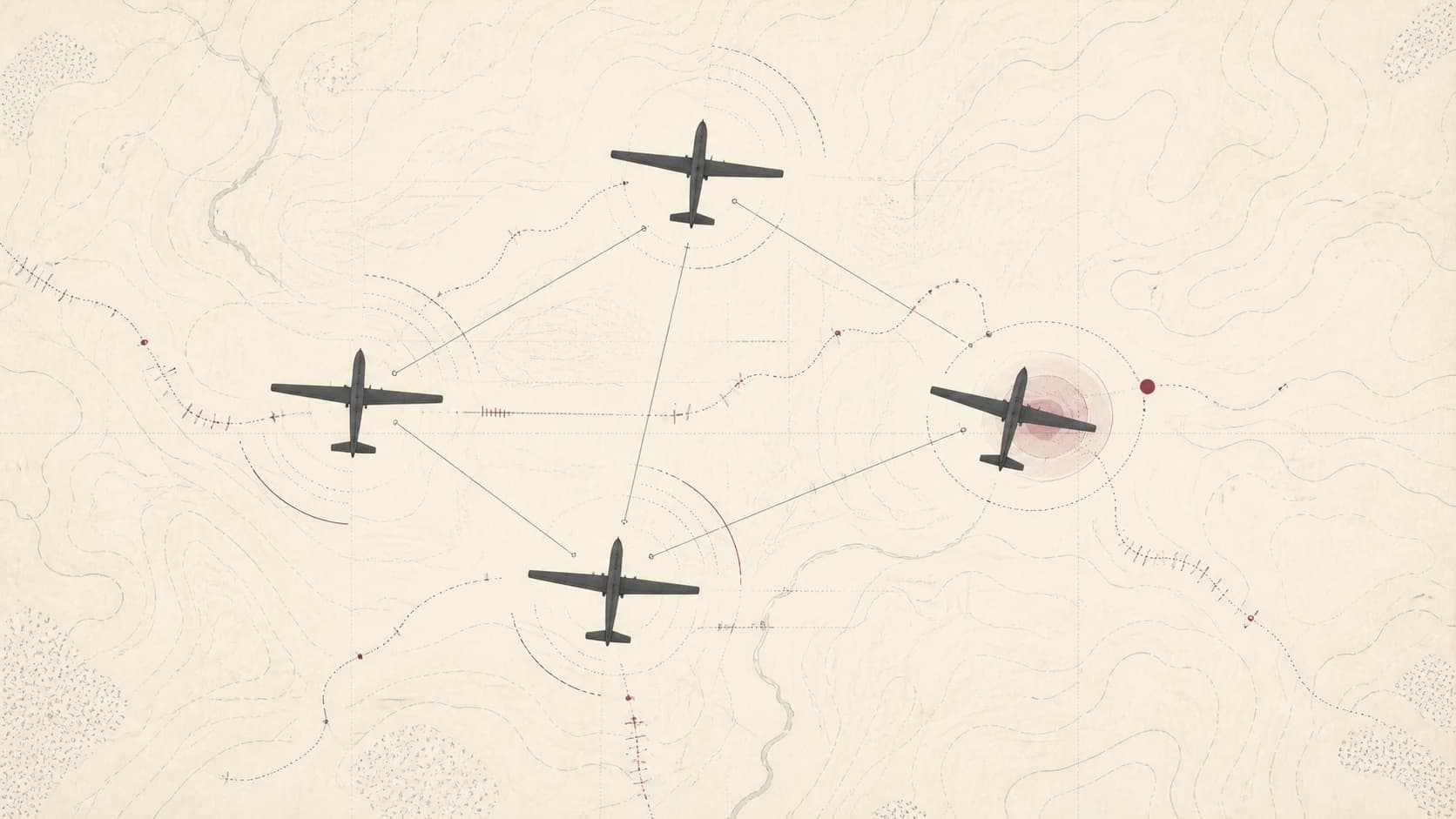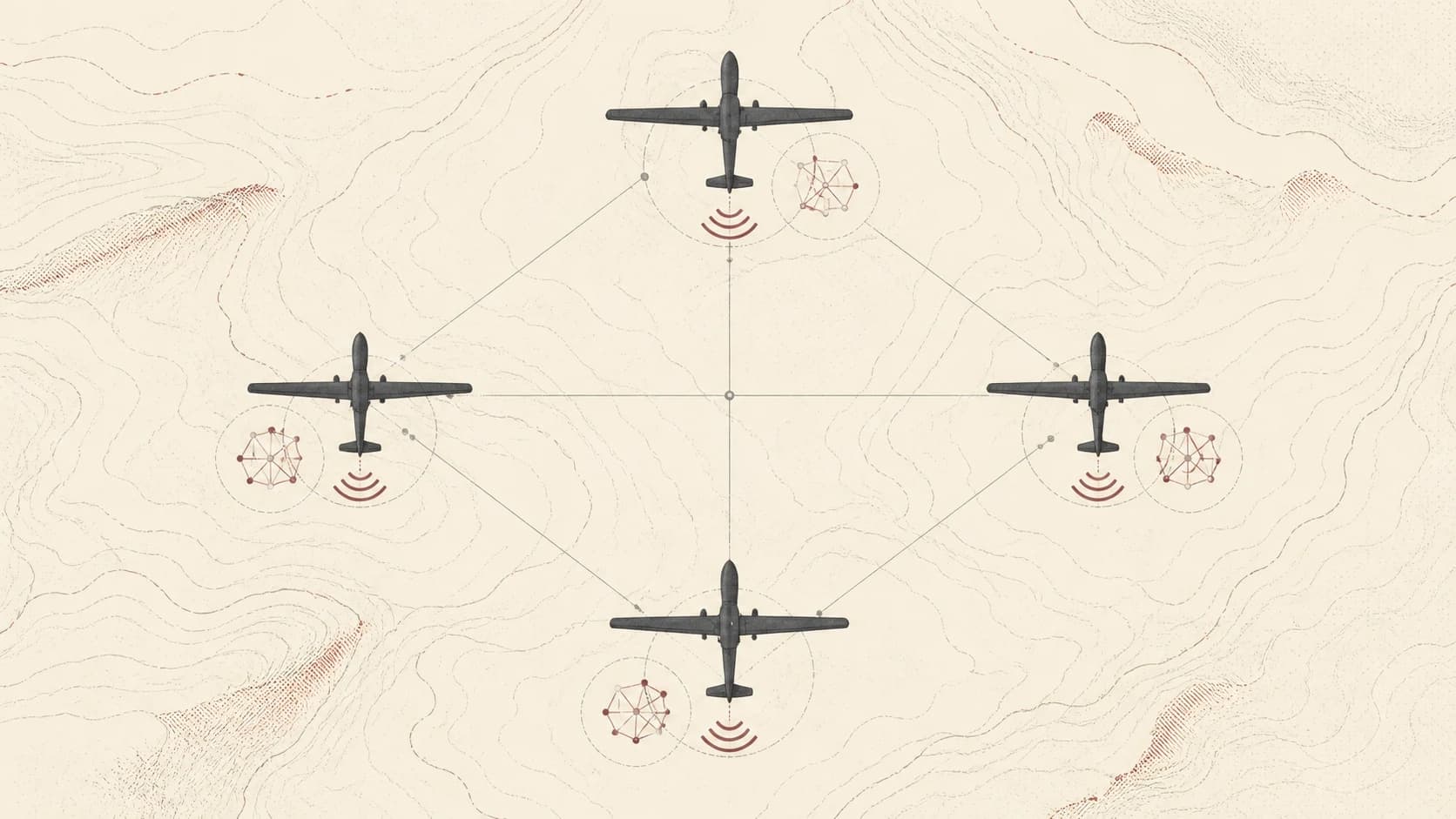
Drone fleets are a natural setting for decentralized federated learning. They operate at the edge, generate sensitive mission telemetry, face bandwidth constraints and may be exposed to adversarial conditions.
The design goal is not to make every drone upload everything. The goal is to let the fleet learn together while preserving operational boundaries.
What drones can learn locally
Each drone can train or adapt models using its own observations:
- radio anomalies,
- navigation inconsistencies,
- visual or thermal patterns,
- spoofing indicators,
- jamming symptoms,
- route deviations,
- local environmental context.
Those observations may be sensitive. They can reveal location, mission profile, infrastructure details or operational tactics.
DFL pattern for a fleet
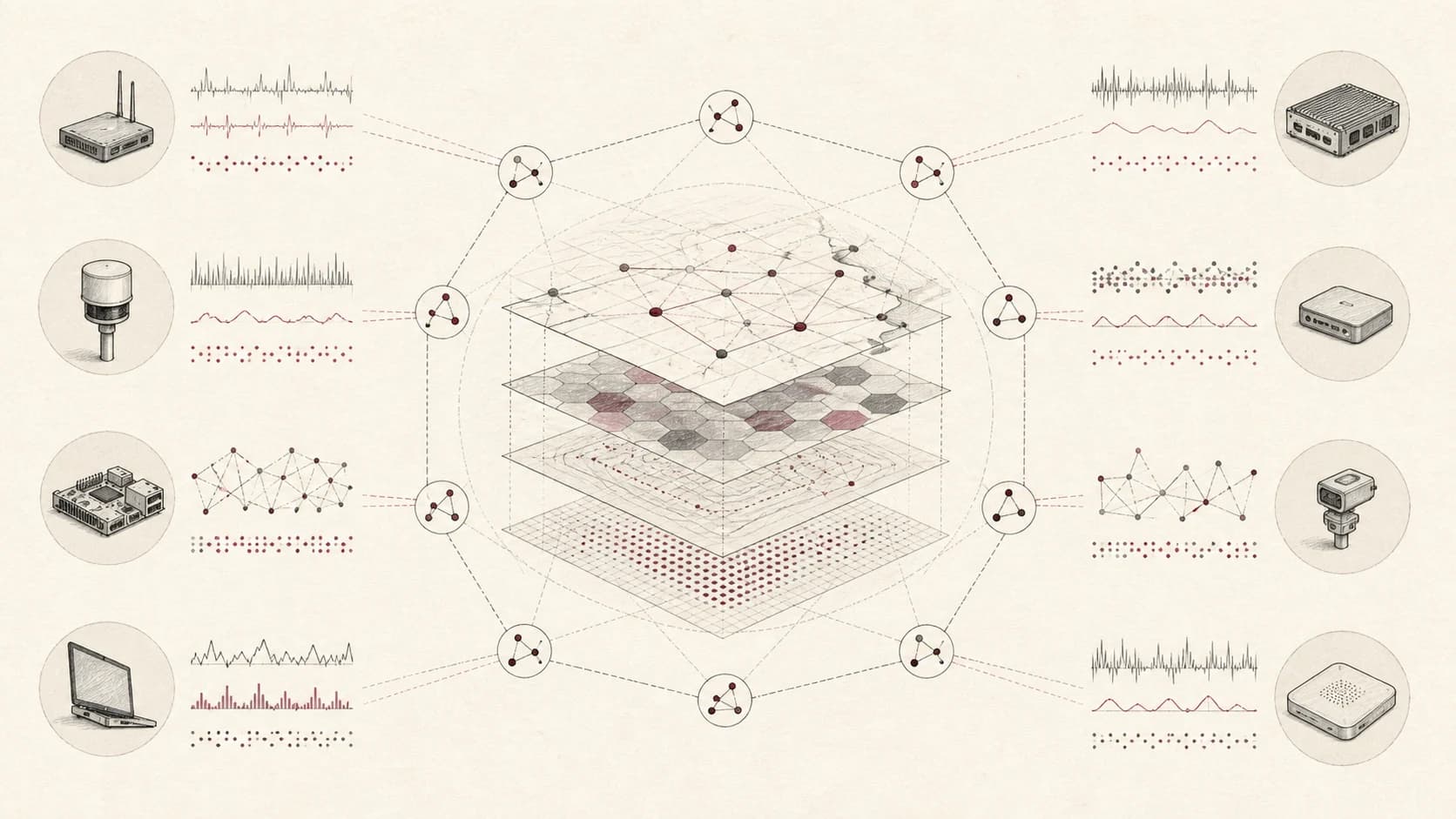
In a DFL setup, drones or edge gateways exchange model updates instead of raw data. Aggregation can happen through the fleet topology, a nearby edge node or a semi-decentralized coordination layer.
The model can improve across the fleet while limiting exposure of mission telemetry.
Cyberdefense implications
The main security questions are practical:
- What happens if one drone is compromised?
- How are poisoned updates detected?
- How does the fleet handle intermittent connectivity?
- Which alerts require local action and which require operator review?
- How are explanations generated for human decision-makers?
DFL is useful only if it is paired with robust aggregation, trust scoring, secure communication and clear operational playbooks.
Key takeaway
For drone fleets, DFL is most credible when it is scoped to collaboration under constraints: learning from local observations, keeping mission telemetry local and making compromised or unreliable peers visible to the rest of the system.
Open research question
How should a fleet balance local autonomy with shared model updates when connectivity is intermittent and some nodes may be adversarial?
Separate collaborative learning from local inference
Alert inference should not wait for a federated round to finish. In an evaluation architecture, each platform retains a validated model and a lower-priority training channel. When a link fails, local inference continues and the shared knowledge is marked stale. Missing connectivity does not mean an absence of threats.
Onboard training competes with other functions for energy and compute. Training can be scheduled within an authorized resource window; safety-critical execution requires its own design and validation. A strong F1 does not establish suitability for flight control.
What to test during a disconnection
A reproducible test should vary outage duration, model age and local data diversity. On reconnection, discard duplicates and check architecture version, feature schema and training epoch. An old update does not become current by arriving later.
| Condition | Experimental question |
|---|---|
| Intermittent link | Does detection continue with the local model? |
| Rejoining node | How long does quality recovery take? |
| Sensor changes | Is an incompatible input detected? |
| Constrained resources | Is the energy budget respected? |
The theory of decentralized SGD with changing topology helps reason about connectivity, but its assumptions must be checked against each scenario. Flighter provides a related simulated aerial-reconnaissance study, not certification for operational fleets.
The Flighter reliability note explains how to treat context as evidence. The DFL topology guide helps specify the peer protocol.