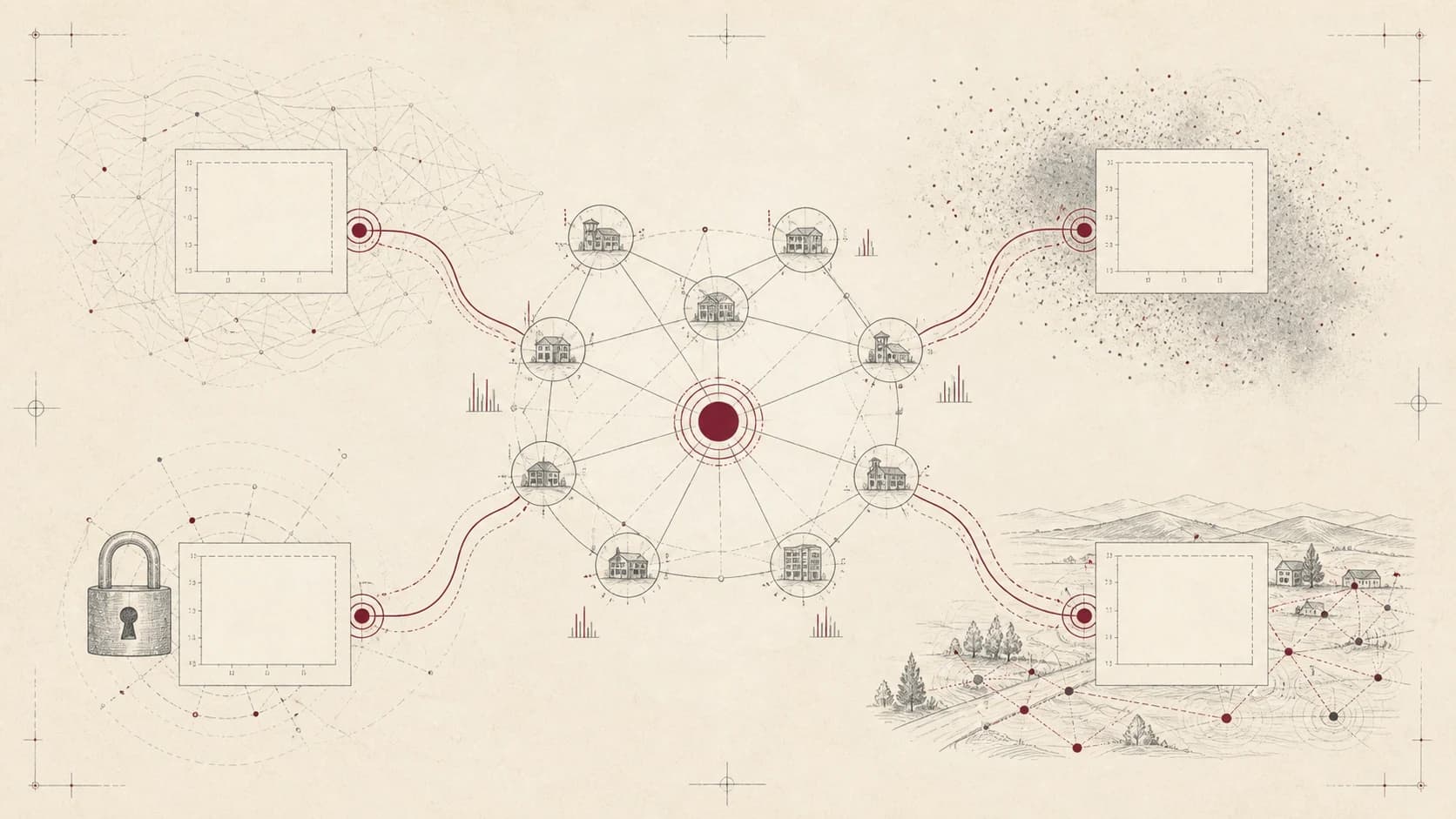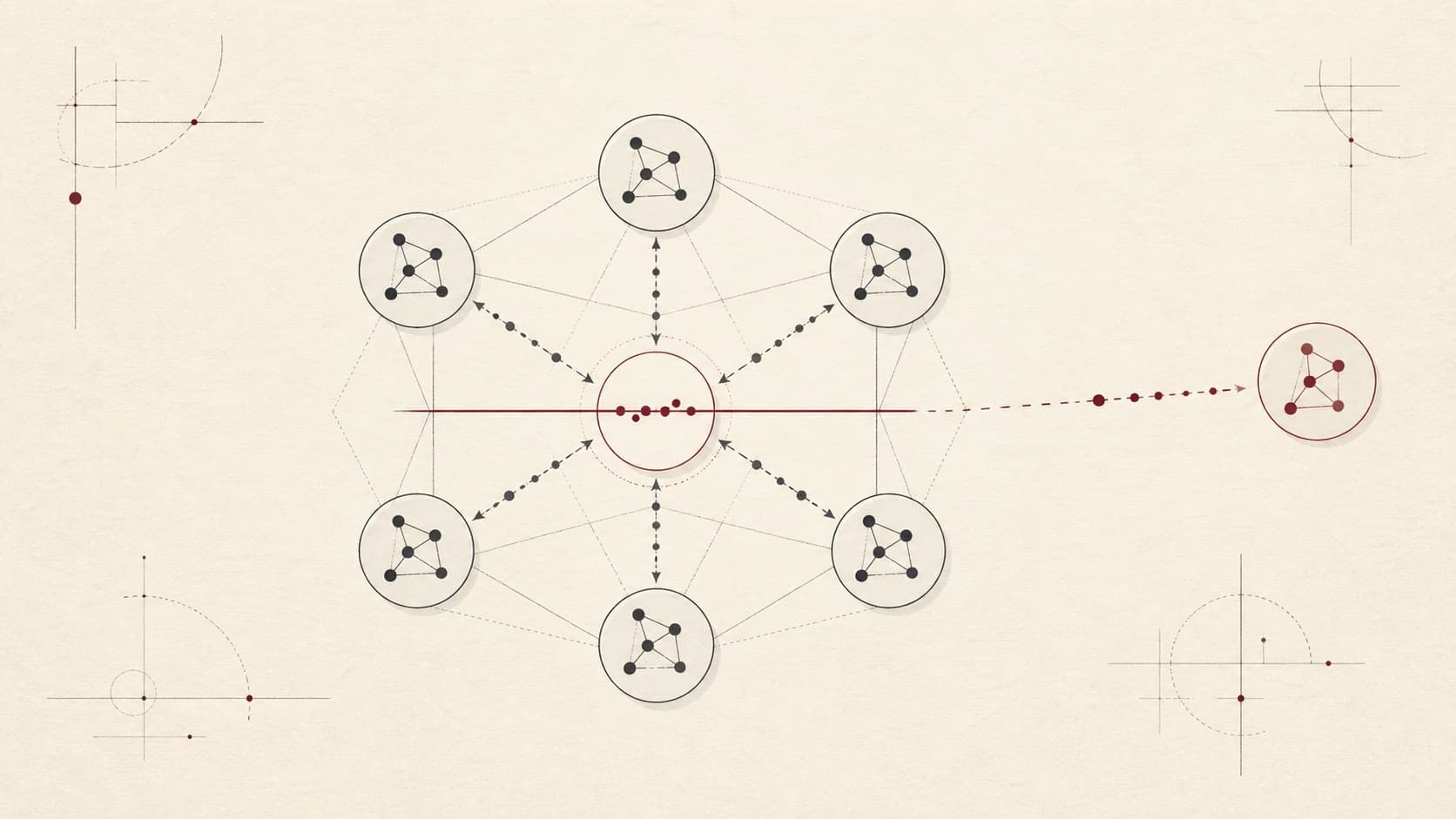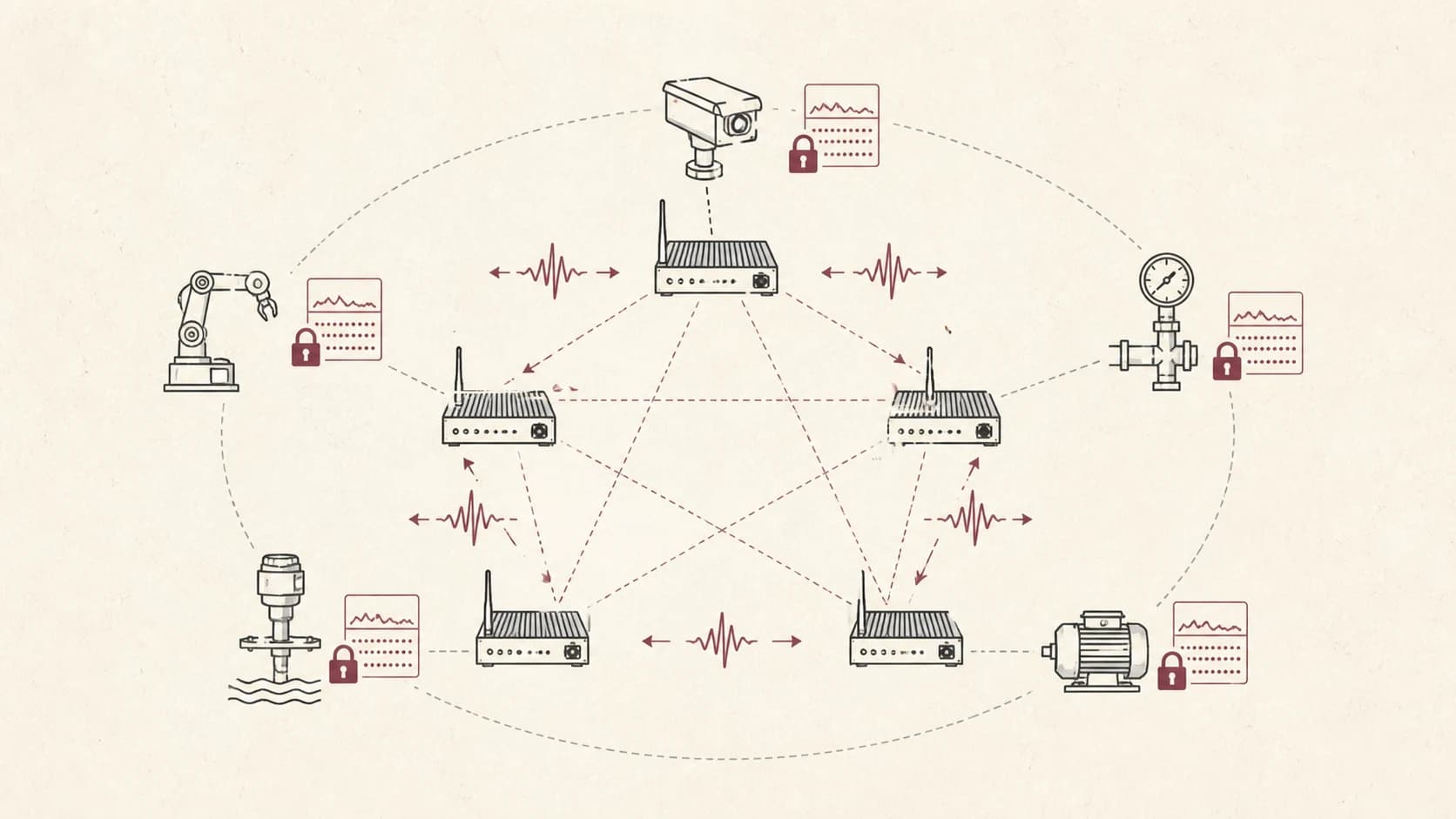
IoT security monitoring often depends on packet traces, device fingerprints and behavior patterns that should not leave their local environment. Decentralized federated learning offers a way to collaborate without making raw telemetry centralization the default.
Edge-local learning
Each gateway or device cluster can train locally using its own observations. The shared artifact is a bounded model update, not the raw trace.
This matters because IoT telemetry can reveal sensitive operational details: device inventory, routines, network topology and attack surface.
Privacy budgets
Privacy should not be a static setting. A low-risk device and a critical asset should not necessarily use the same budget or reporting cadence.
Adaptive privacy budgets can react to:
- threat level,
- asset criticality,
- model drift,
- observed attack intensity,
- regulatory or organizational constraints.
Operational realism
The hard part is making the system realistic. IoT environments have limited compute, intermittent connectivity and heterogeneous data. A useful DFL design must be lightweight, robust to missing peers and explicit about what security guarantees it actually provides.
For operators, the output should be more than a score. It should include an explanation of the affected device behavior, confidence and uncertainty, and the data boundaries respected while producing that assessment.
Key takeaway
Privacy-preserving IoT security is useful only if it remains operationally honest: the system should say what it learned, what data never left the local boundary, how confident the assessment is and whether operators have enough context to act.
Open research question
How can adaptive privacy budgets react to threat intensity without becoming a side channel that reveals sensitive information about local assets?
Define what is protected before choosing epsilon
A differential privacy guarantee needs a protected unit. It may be a flow, a session, a device or an organization's entire contribution. Protecting one row is different from protecting a device that produces thousands of correlated rows. Also specify who observes updates: one neighbor, colluding participants or a monitoring service.
Clipping, noise and privacy accounting have a formal foundation in Deep Learning with Differential Privacy. Arbitrary noise is insufficient. The cumulative budget depends on releases and the mechanism; changing the threat level does not reset it.
A useful experiment for IoT gateways
As a proposed evaluation, split data by device and time before constructing windows. If windows from the same flow appear in training and test, the result may measure memorization. Compare a local-only detector, server-based FL and DFL using identical preprocessing.
| Question | Proposed measurement |
|---|---|
| Does it detect new devices? | Recall on devices held out for testing |
| Is it sustainable? | False alerts per device per day |
| Does it fit the gateway? | Peak memory and inference time |
| What exposure remains? | Leakage evaluation and cumulative privacy budget |
Bonawitz and colleagues' secure aggregation hides individual contributions under a specific protocol. Its server-based design does not become peer-to-peer merely by changing the transport.
An adaptive policy must treat attack intensity as potentially sensitive data. Publishing when a node reduces its noise may disclose local activity. The privacy and robust aggregation guide develops this interaction; the FL foundations guide explains the starting point.