Critical infrastructure operators need anomaly detection, but they also need privacy and operational control. In energy systems, raw telemetry may expose substations, load profiles, operational routines and sensitive fault patterns.
Federated anomaly detection is a way to collaborate without pooling everything.
Why energy systems are different
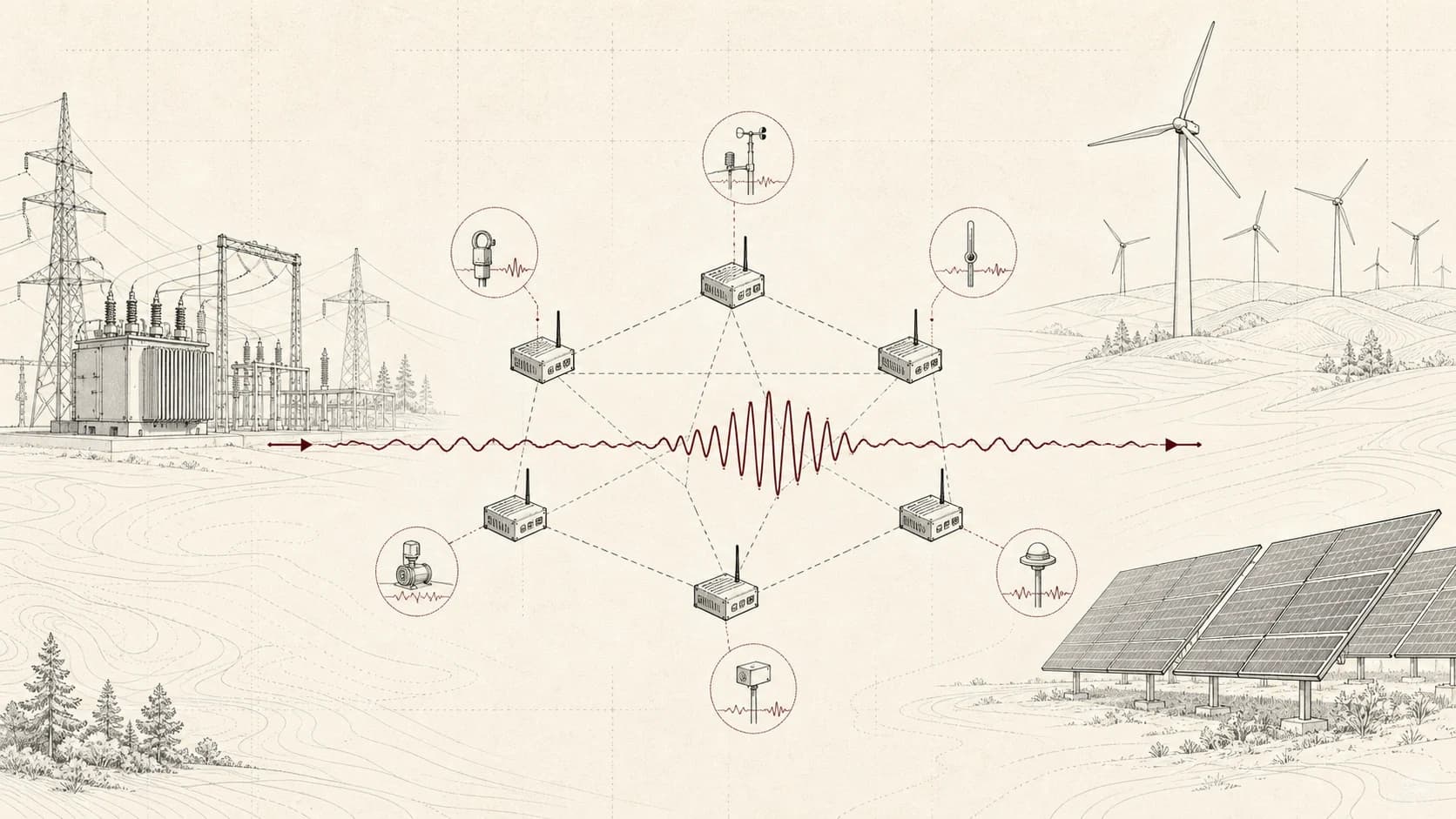
Smart-grid telemetry is temporal, heterogeneous and context-dependent. The same signal can be normal in one operational state and suspicious in another.
That means detection models need context:
- threat level,
- asset criticality,
- seasonality,
- model drift,
- local operating constraints.
Decentralized learning pattern
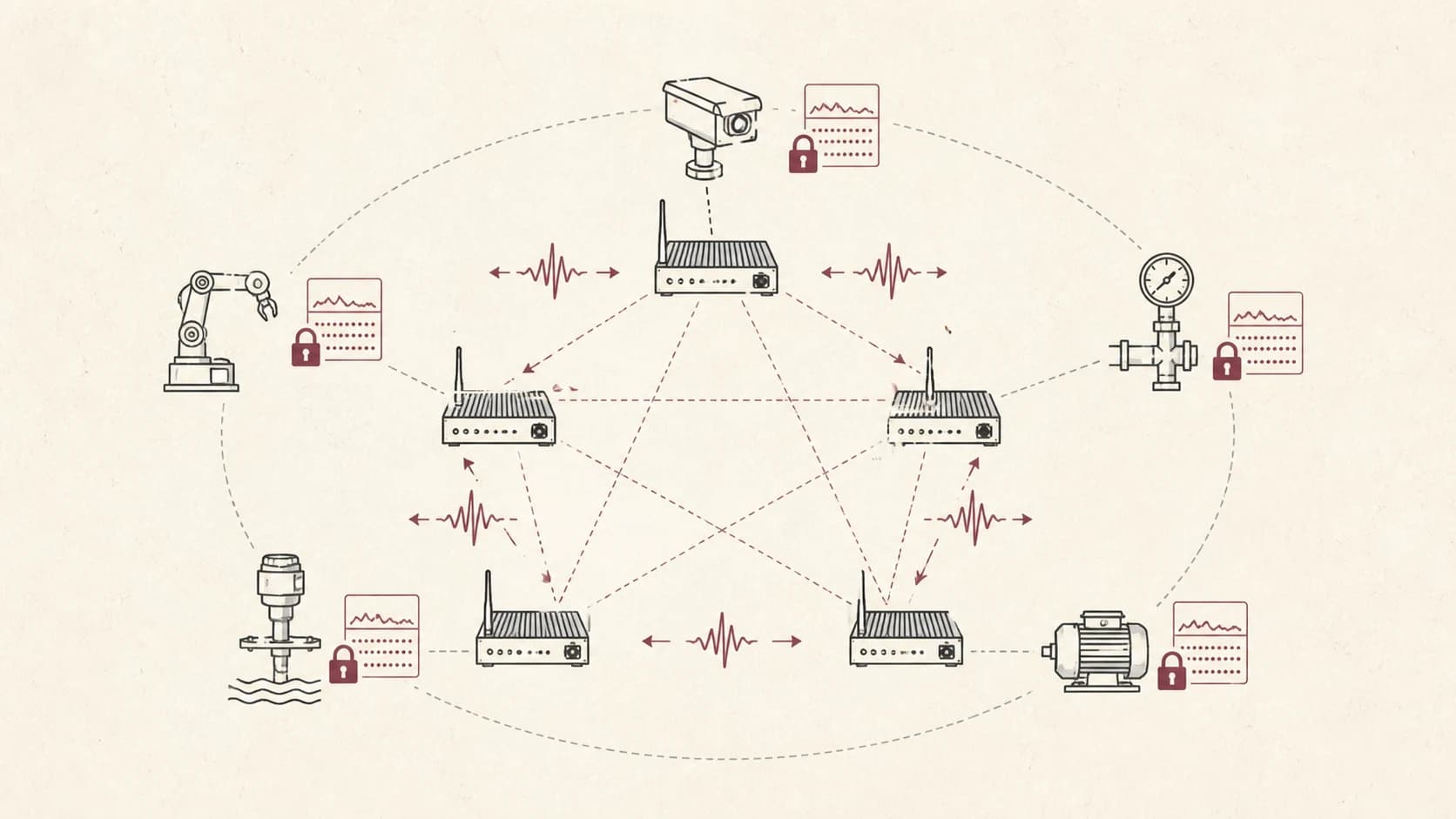
Each monitoring node can train on local time-series data and share model updates or distilled signals with peers. The goal is to detect cyberattacks and anomalies while preserving control over sensitive industrial data.
This is not just a privacy feature. It is also an availability and resilience feature: the system should keep learning even when a central service is unavailable.
Trustworthy alerts
The alert should explain why a signal matters and whether the model is operating in a familiar regime. If drift is high, the alert should say so. If peers disagree, that disagreement is part of the evidence.
Trustworthy anomaly detection is not only about raising alerts. It is about making alerts useful enough to support mitigation.
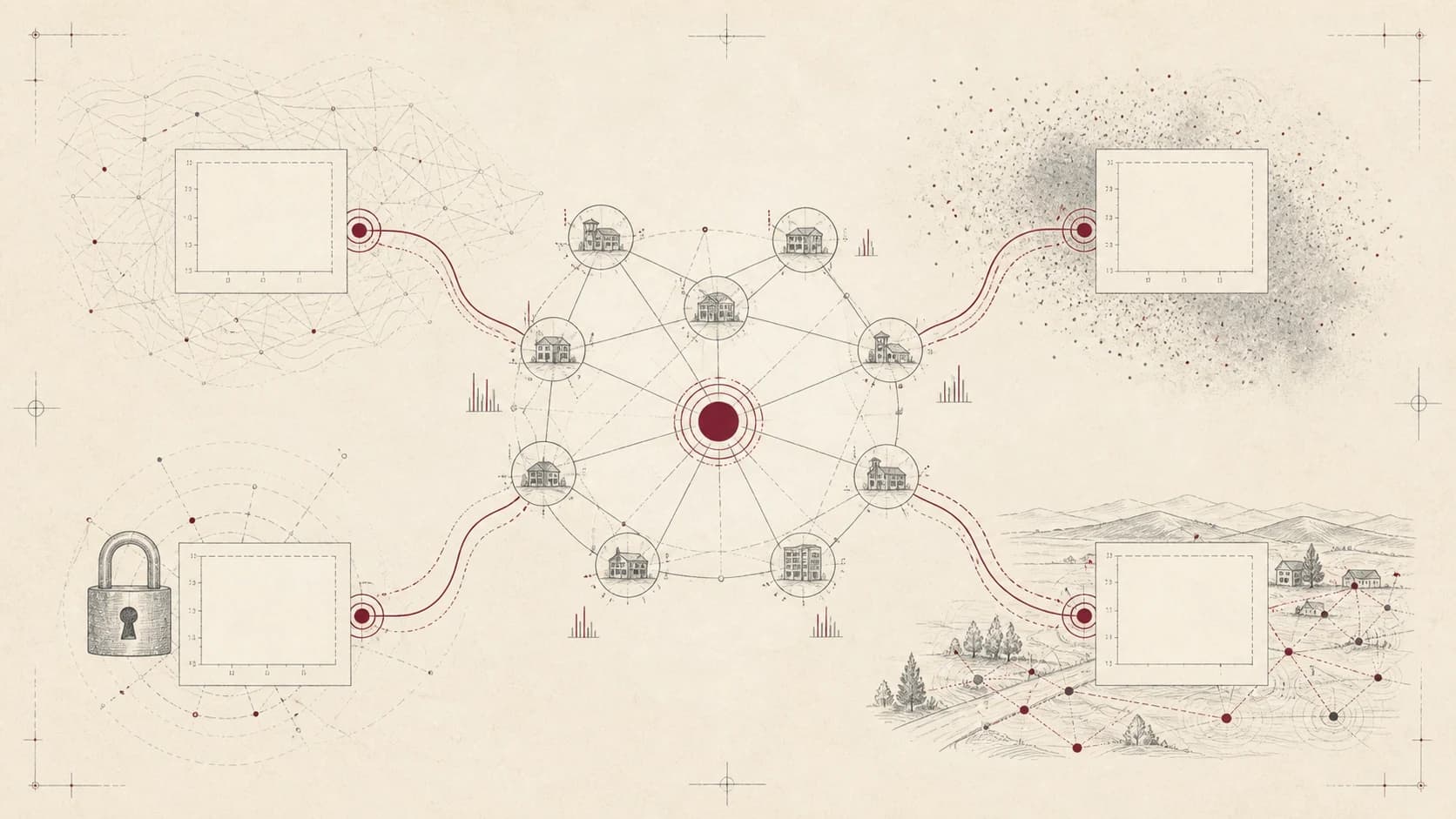
For critical infrastructure, alert evidence must remain constrained and auditable: affected asset, anomaly window, peer agreement, drift level, safety constraints and approved operational context.
Key takeaway
In critical infrastructure, federated anomaly detection should prioritize useful, bounded evidence over broad data sharing. The alert must be explainable, auditable and aligned with operational constraints so operators can decide whether to investigate, mitigate or keep observing.
Open research question
How can federated energy systems distinguish true cyber anomalies from local operational changes when raw telemetry cannot be pooled centrally?
Prevent temporal leakage in evaluation
A time-series detector can appear excellent when training contains fragments almost identical to the test set. Split periods, facilities and events first, then construct windows. Fit normalization and feature selection on training data only. Reserve a future period for regime changes, without recalibrating the threshold using its labels.
As a design example, a consumption increase during a shift change should be compared with that operating regime. An isolated signal deviation does not establish a cyberattack. Distinguish physical anomalies, sensor failures, authorized maintenance and confirmed incidents in the labels.
Metrics an operator can interpret
Point-wise accuracy can hide repeated alerts about a single event. Report detected episodes, delay from onset, false alerts per operating day and alert duration. Explain any adjustment that counts an entire event as detected after a single positive point: this changes the interpretation of the result substantially.
TemporalFED studies industrial time series using federated learning, including temporal preprocessing, performance and resources. It is a related methodological reference; its chemical industrial scenario is not direct validation on an electricity grid. Transferring the approach to energy requires data and constraints from the target domain.
Update without learning the attack as normal
A model that continuously learns from a prolonged intrusion may eventually treat it as normal. Keep a queue of examples awaiting review, compare against a stable model and retain the ability to withdraw an update. Operational response can align with NIST SP 800-61 Rev. 3, without implying that the framework validates the detector.
The DFL monitoring and mitigation lifecycle connects these measurements to alert management.