In this article
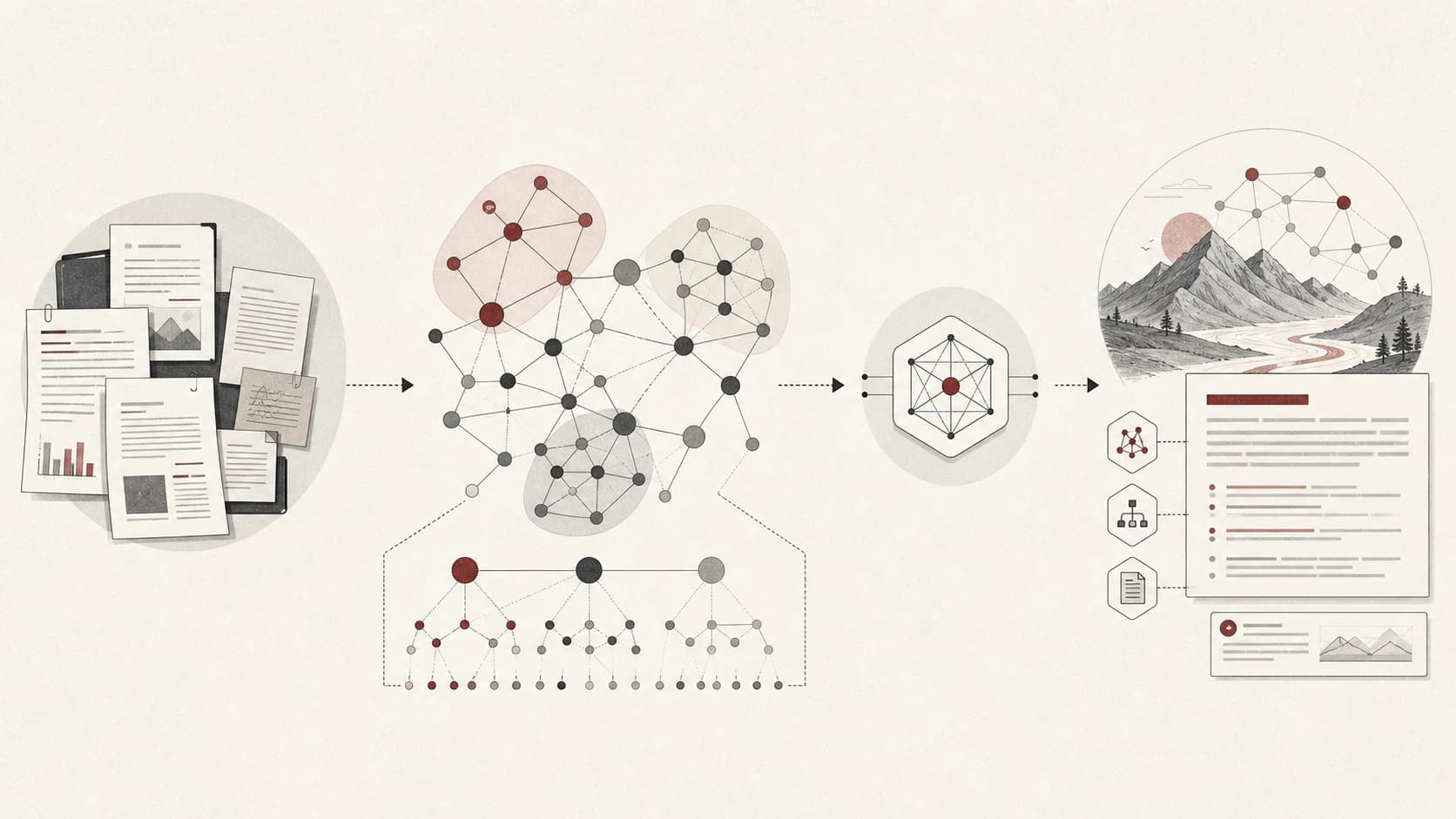
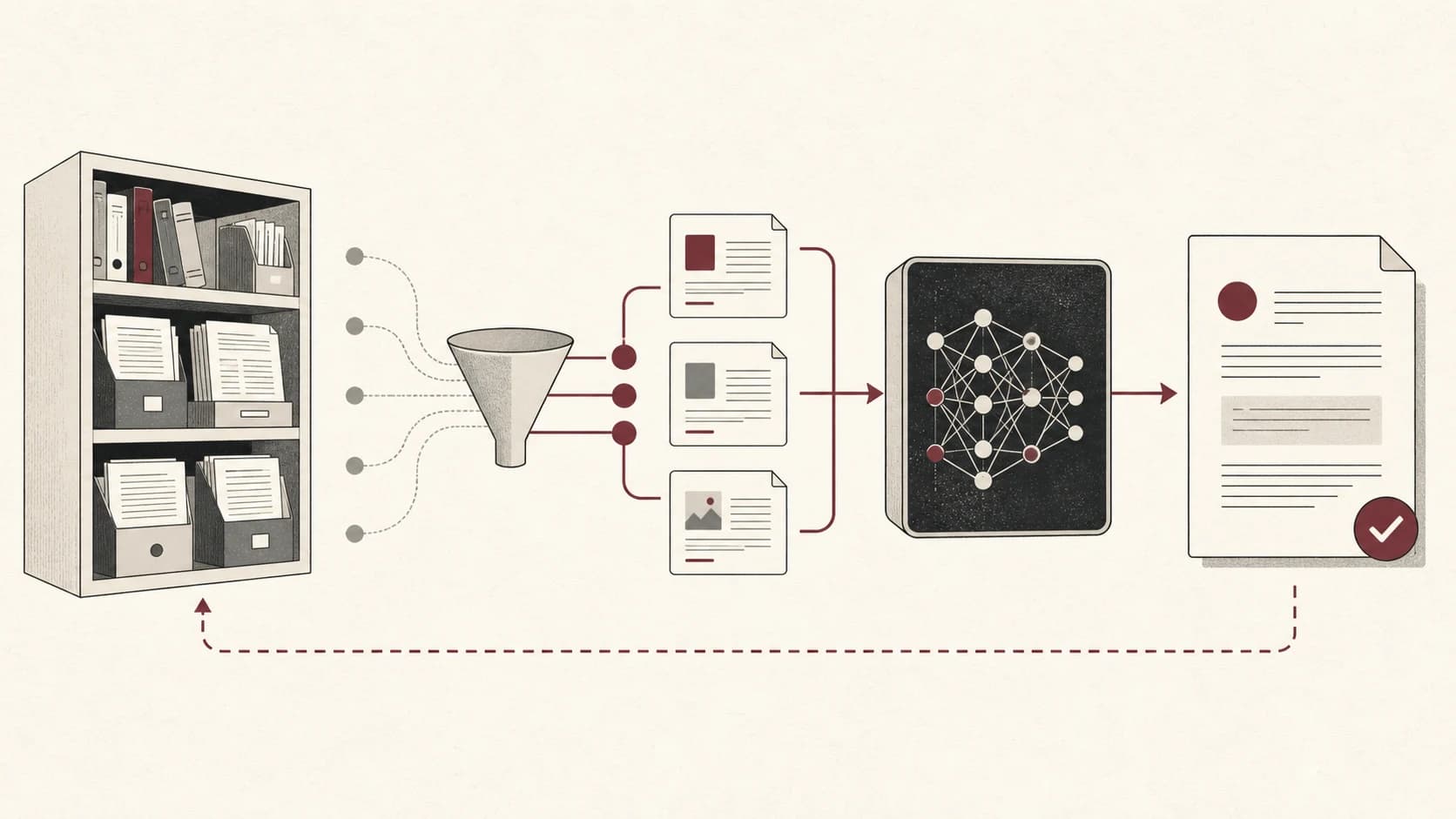
Retrieval-Augmented Generation, or RAG, combines a language model with an external collection of documents. The collection can contain playbooks, vulnerability records, incident reports or local policies. The model receives a selected context at inference time instead of relying only on what was learned during pre-training.
The idea is simple. The engineering is not.
1. The basic pipeline
Given a query and a document collection , a retriever selects a context:
If the formula does not fit, focus it and use the left and right arrows, or scroll horizontally.The generator then produces an answer conditioned on both the query and the context:
If the formula does not fit, focus it and use the left and right arrows, or scroll horizontally.The equation does not guarantee that the answer is supported. It only describes where the model received its context.
2. What matters in security settings
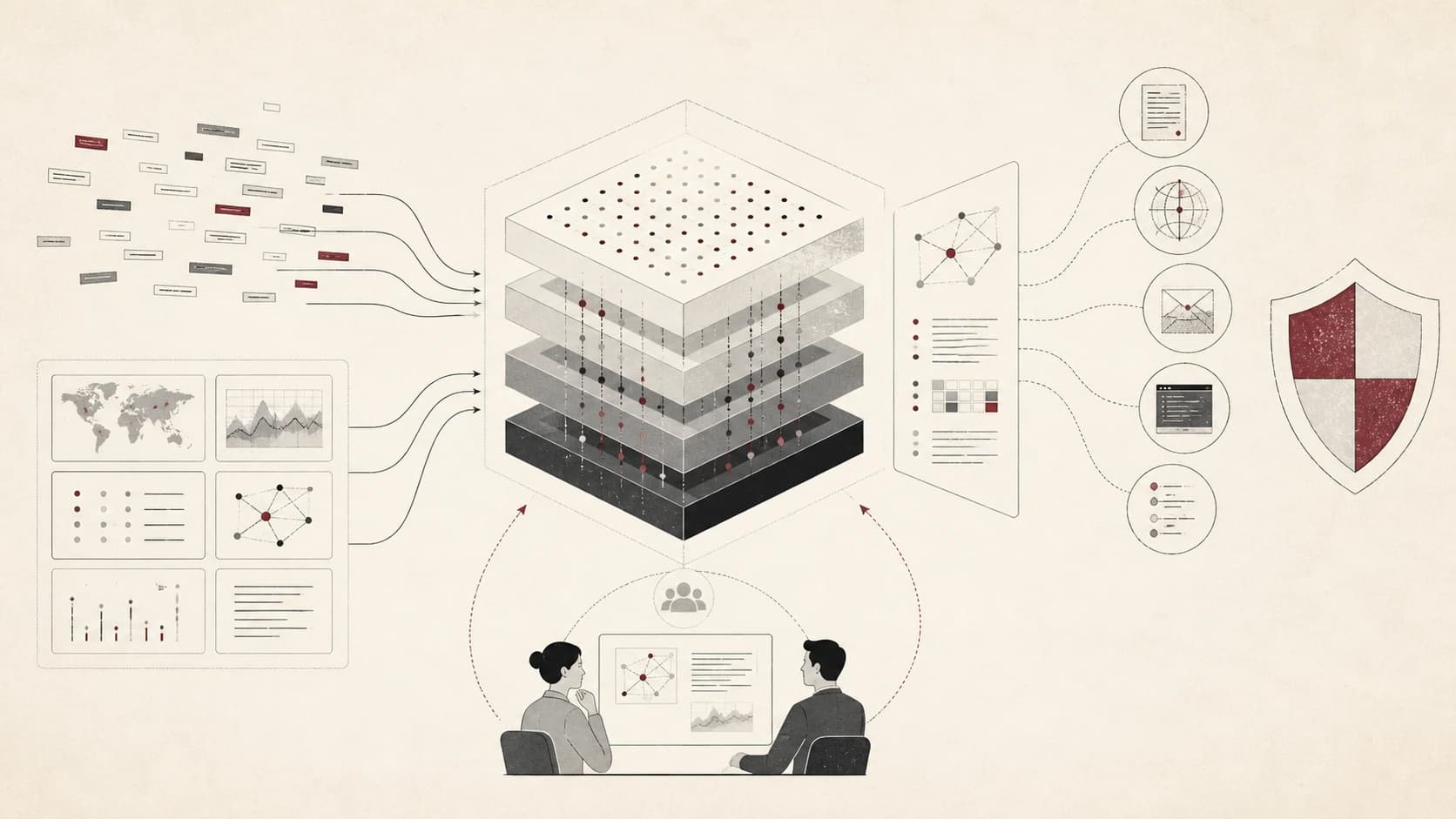
Security RAG needs more than semantic similarity. Retrieval should consider:
- document authority and version,
- time validity,
- asset or environment scope,
- access control,
- indicator normalization,
- whether the evidence is an observation, a rule or a hypothesis.
A stale playbook can be more dangerous than no playbook because it may look authoritative.
3. Separate retrieval quality from generation quality
If the answer is wrong, ask whether the retriever missed the relevant evidence, selected conflicting evidence or returned a good context that the generator misused. Store the retrieved identifiers and scores so the failure can be localized.
For a response with claims , a grounding review can estimate:
If the formula does not fit, focus it and use the left and right arrows, or scroll horizontally.This is a useful diagnostic, not a substitute for expert review.
4. RAG is not a security boundary by itself
Retrieved documents can contain malicious instructions, sensitive data or contradictory policy. The application must keep instructions separate from evidence, filter access before retrieval and prevent the model from treating document text as a new system command.
The output should include citations, uncertainty and a refusal when the context is insufficient. A confident answer without provenance is a failed security response.
5. A disciplined rollout
Build a small, versioned corpus first. Use a golden set of realistic queries, include stale and conflicting documents, and evaluate retrieval and generation separately. Add human corrections to the evaluation set only after adjudication.
RAG improves access to current knowledge. It does not remove the need for source governance, access control or careful measurement.
Example: a vulnerability and two playbook versions
Suppose a query asks which procedure applies to an asset. The corpus contains an old guide, a current revision and an incident note carrying unrelated instructions. Retrieval must filter by permissions and scope, identify the applicable version and retain the old guide only when it helps explain a change. Embedding similarity does not resolve that conflict.
A hybrid strategy can combine lexical matching for exact identifiers with semantic search for descriptions. A reranker then orders permitted candidates. Evaluate the combination against each retriever alone: extra layers do not guarantee better retrieval and add latency and failure points.
Minimal reproducible case
This corpus is fictional and tests evidence selection, not actions on a real system. Ingest the three documents with their metadata and retain the identifier when chunking:
[
  {"id":"PB-1","asset":"demo-web","current":false,"allowed":true,"text":"The applicable guide is version 1. Superseded by PB-2."},
  {"id":"PB-2","asset":"demo-web","current":true,"allowed":true,"text":"The applicable guide is version 2. Revising it requires approval from the owner."},
  {"id":"INC-1","asset":"demo-web","current":true,"allowed":false,"text":"Restricted incident note."}
]
Query: “Which guide version should I consult for demo-web, and who must approve its revision?” Filter by asset, current status and permission before building the context. Only PB-2 satisfies all three conditions in this controlled case.
Expected answer: “Version 2; revising it requires approval from the owner [PB-2].” Record retrieved identifiers, supplied context and the answer. The case fails if it cites PB-1 as current, exposes INC-1, omits the citation or invents the owner's name.
Repeat after removing PB-2: the answer must acknowledge that no current authorized guide is available. This control tests constraints and answer support; it does not independently measure semantic retrieval quality.
Diagnose where the answer is lost
I propose three runs per case: actual retrieval, manually selected correct context and no context. If generation fails even with correct evidence, increasing top-k will not solve the problem. If it succeeds only with manual context, inspect indexing, filters and ranking.
RAGChecker provides an approach to separate retrieval and generation diagnostics. The foundational work by Lewis and colleagues explains combining retrieval and generation; applying it to a SOC adds environment-specific freshness and authorization requirements.
Revocation and caches
When permission is revoked or a document withdrawn, inspect chunks, cached answers and derived summaries too. A correct citation does not authorize disclosure. Design a test where the user loses access between queries and verify that previous content does not reappear improperly.
For relationships across reports, see GraphRAG for threat intelligence. To protect the document-to-tool boundary, continue with prompt injection in RAG and agents.